Karan Arora
Lead Engineer / Founder
Understand why major brands are abandoning traditional e-commerce platforms for lightning-fast headless architectures — and whether it's right for your store.
The Problem With How Most Online Stores Are Built
Most online stores are built like old apartment buildings — everything is connected to everything else. Want to repaint the walls? You have to be careful not to disturb the plumbing behind them. Want to move a partition? Better check what's load-bearing. Want to change how the checkout looks? You need to go into the backend code and hope you don't break the inventory system while you're in there.
This is what traditional e-commerce platforms look like under the hood. Shopify, WooCommerce, Magento — they were built in an era when websites were simpler, device variety was limited, and nobody expected instant load times. Today, that architecture is showing its age.
What "Headless" Actually Means
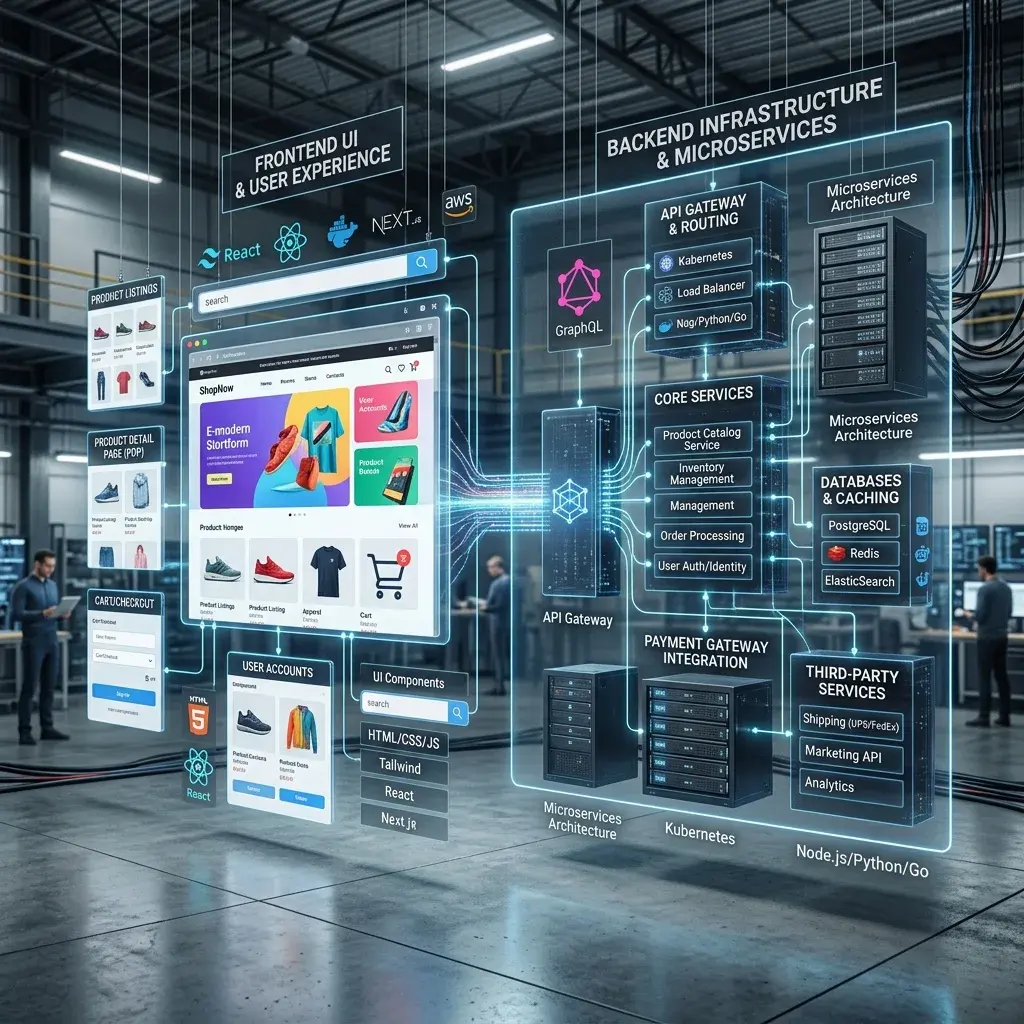
Headless e-commerce is a genuinely simple concept with a complicated-sounding name. It means you separate your store's front-end (what the customer sees and interacts with) from your back-end (where the products, inventory, orders, and payments live).
The two sides communicate through APIs — essentially, the front-end asks the back-end "what products do you have?" and the back-end answers. They're independent. You can completely redesign the front-end without touching the inventory system. You can replace the inventory system without rebuilding the website. They're decoupled, but they still work together seamlessly.
The "head" that's been removed, by the way, is the theme or template layer that traditional platforms use to combine front and back-end into one locked-together system.
The Speed Advantage — and Why It's Worth a Lot of Money
A Next.js headless storefront typically loads 3–5x faster than a traditional Shopify theme. This is not a marginal improvement. It's the difference between a page that loads in 0.8 seconds and one that loads in 3.5 seconds.
Why does this matter so much? Because Amazon ran research suggesting that every 100ms of latency costs them 1% of sales. A 2-second delay in load time during a transaction results in abandonment rates increasing by 87%. For Indian consumers on mobile networks, speed is not just a nice-to-have — it's often the deciding factor between completing a purchase and closing the tab.
Fast stores sell more. It's that direct.
The Flexibility That Traditional Platforms Can't Give You
With a headless setup, you can do things that are simply impossible with traditional platforms. Want to run a completely different shopping experience during a Diwali sale — different layout, different navigation, different landing pages — and then switch back to normal on November 1st without touching your inventory system? Easy. Want to show your products on your Instagram Shop, your website, your mobile app, and a partner retailer's site, all from the same product database? Done.
We had a client in the fashion space who wanted to let customers visualize outfits using a 3D try-on tool. That kind of interactive, GPU-heavy experience is simply not possible inside a Shopify theme. In a headless Next.js storefront, it's just another React component. The back-end still handles orders and payments. The front-end can do whatever the designers dream up.
Is Headless Right for Your Store?
Honest answer: not always, and it depends on where you are in your growth journey. If you're just starting out with under 50 products and a modest traffic level, a standard Shopify store is probably the right choice — it's fast to launch, reliable, and handles the basics well. Don't over-engineer early.
But if you're hitting the ceiling of what your current platform can do — if your developers wince whenever you ask for a custom feature, if your page speed scores are embarrassing, if your mobile conversion rate is significantly below your desktop rate — then headless is worth a serious look. The investment makes sense when you're at the scale where the speed gains and flexibility gains have real revenue impact.
Typically, we see headless becoming the right conversation for stores doing above ₹10 lakh per month in revenue, or any store with ambitious plans for custom experiences that their current platform won't support.
What the Migration Looks Like
The good news is that "going headless" doesn't mean rebuilding from scratch or losing your product data. In a typical Shopify-to-headless migration, we keep Shopify as the back-end. All your products, inventory, customer data, and order history stays in Shopify. We just replace the Shopify theme with a custom-built Next.js front-end that talks to Shopify via their Storefront API.
Your team still uses the Shopify admin they know. Your orders still process through Shopify payments. The only thing that changes is what your customers experience — and that experience gets dramatically better.
Migration typically takes 5–8 weeks depending on the size and complexity of the catalog, and requires no downtime when done correctly.
Ready to build something real?
Stop settling for generic templates and missed deadlines. Partner with a technical team that delivers exceptional quality.
Book a Free Discovery Call arrow_forward